


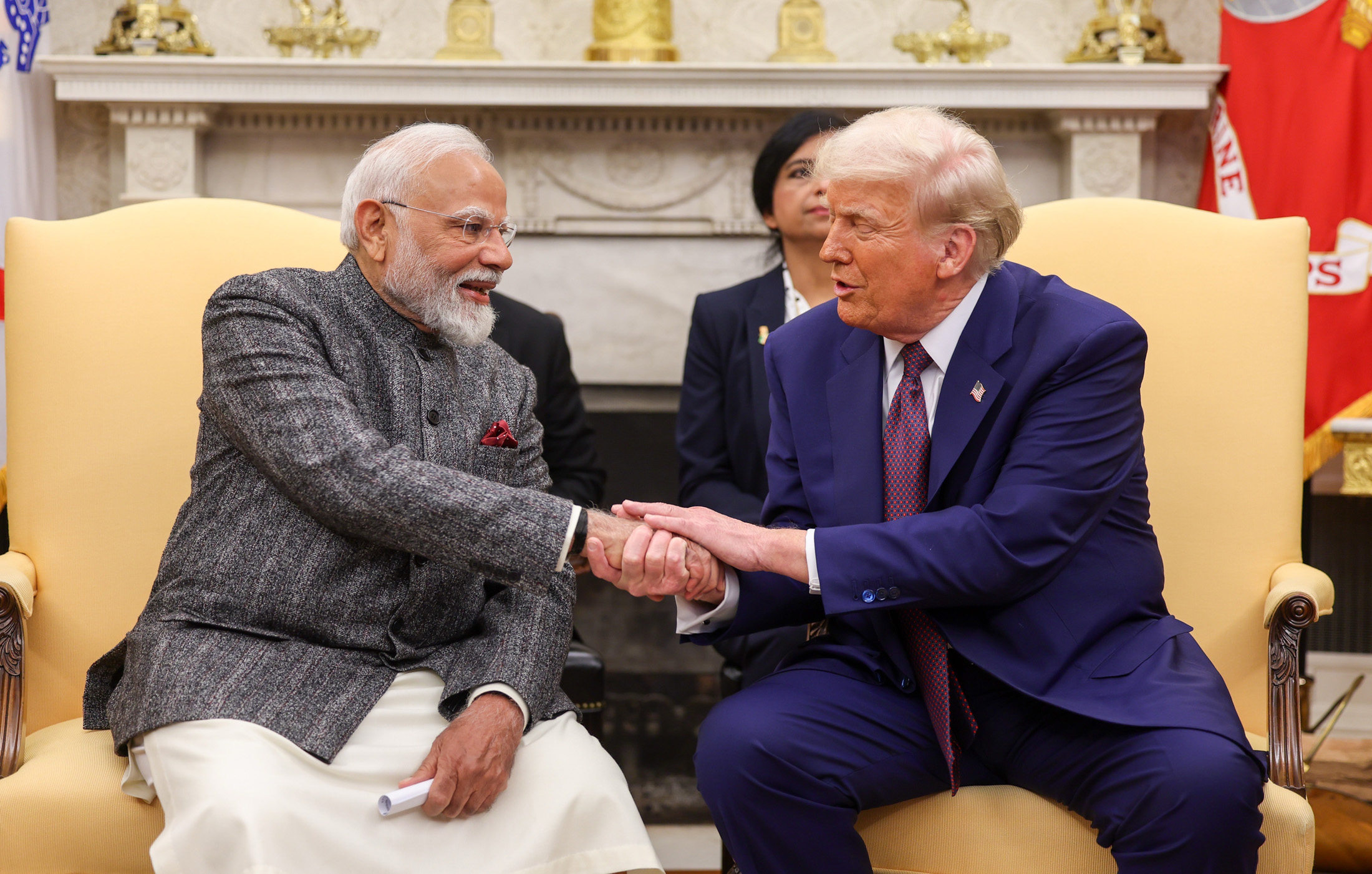
- The decision by US to unilaterally reduce tariffs on Indian goods from 50% (25%+25%) to just 18% (better than most nations) and simultaneously announce a Trade Deal with India, is a strategic, unambiguous victory of PM Modi’s policies.
- It is a signal that India is no longer viewed through the prism of pressure or compliance, but through the lens of partnership, respect, and strategic indispensability.
- India today sits at the convergence point of competing power centres. Under Prime Minister Narendra Modi’s leadership, India has demonstrated that national interest, strategic autonomy, and global cooperation are not contradictory ideas – but complementary ones.
- India as the unique convergence of global interest in India – the only major country ion the world that every major country, block, and region wants to partner with. Be it Australias (NZ and Australia), Europe (EU Trade deal, UK trade deal), Middle East (UAE deal), Africa or North America – India is the ONLY country in the world which is being courted by everyone. The unmistakable result of PM Modi’s India First policy.
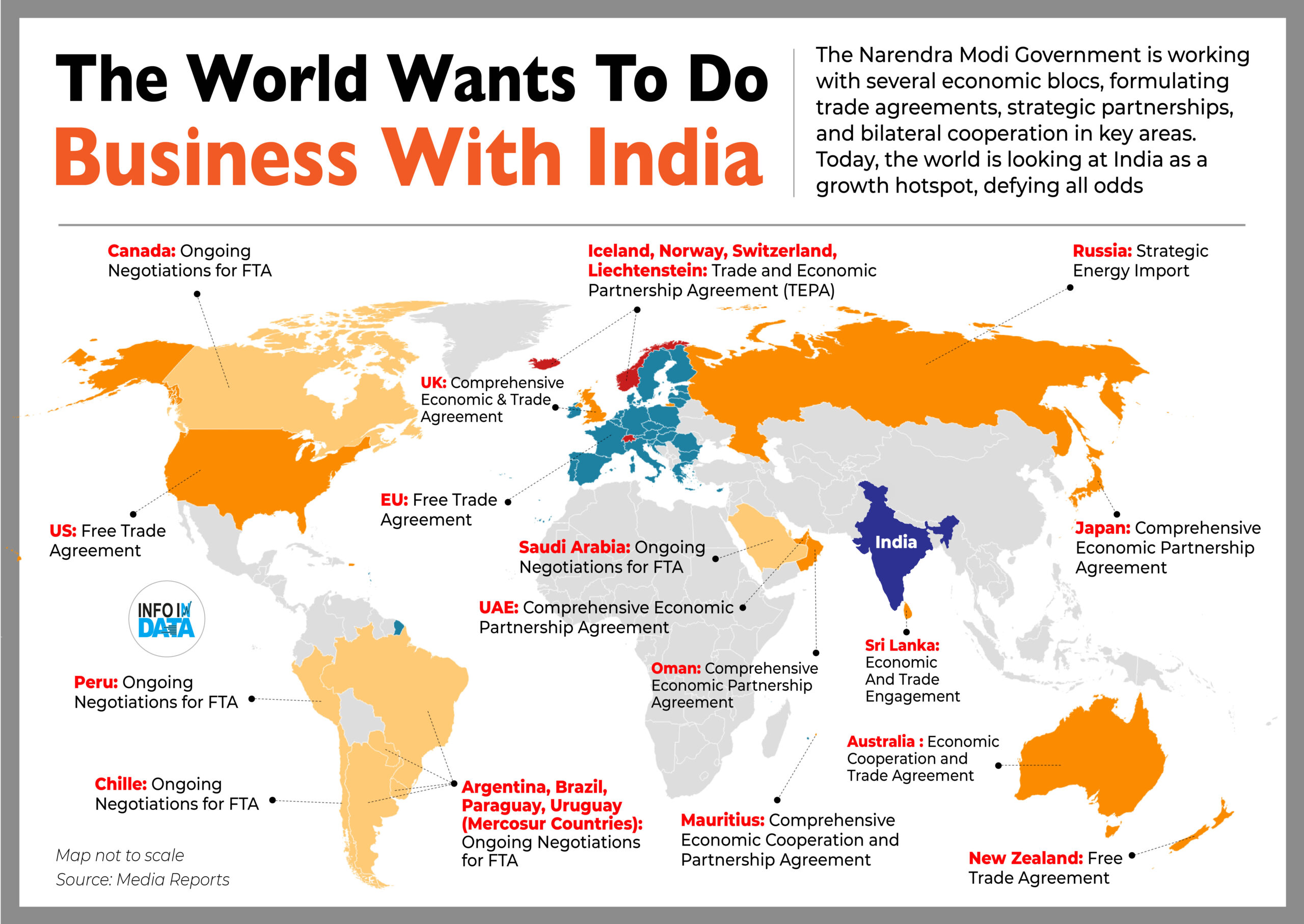
A Strategic Victory for India and PM Modi
- Initial Response to Trump’s Tariffs after his inauguration was tackled by PM Modi expertly
- PM Modi’s February 2025 Washington visit initiated talks, though the initial full deal eluded.
- Modi Government finalised India-EU FTA in January 2026, eliminating tariffs over seven years to double trade, countering US policies.
Announcement of US-India Trade Deal (February 2026)
- On February 2, 2026, following a call with PM Modi, President Trump announced a landmark trade deal, reducing US reciprocal tariffs on Indian goods from 25% to 18% effective immediately.
India-US Trade Deal – What’s in it for India’s Farmers, Youth, MSMEs and other Sectors
MSMEs
- The reduction of US tariffs to 18% unlocks expanded market access for Indian MSMEs in manufacturing, textiles, apparel, leather, footwear, marine products, gems & jewellery, handicrafts, and engineering goods, boosting exports and competitiveness under the Make in India initiative.
- Will enable small producers to integrate into some of the biggest global value chains
Youth
- The deal is expected to create new employment and entrepreneurial opportunities for Indian youth via enhanced trade, export growth, and opportunities with US based companies.
- Opens doors in high-growth sectors like IT, software, AI, engineering, and tech services, providing smoother market access to the US and long-term revenue stability.
Farmers
- Lower tariffs will provide Indian farmers with greater access to the US market for agricultural exports, potentially increasing incomes and opportunities.
- While India’s Agro and Dairy sector continue to be protected, future opportunities lie in balanced trade that could enhance rural economies through innovation and global reach.
Semiconductor
- The deal accelerates semiconductor design, manufacturing, and AI collaboration, positioning India as a global hub with potential for $100 billion in bilateral trade opportunities in the sector.
How US Tariffs Stack Up
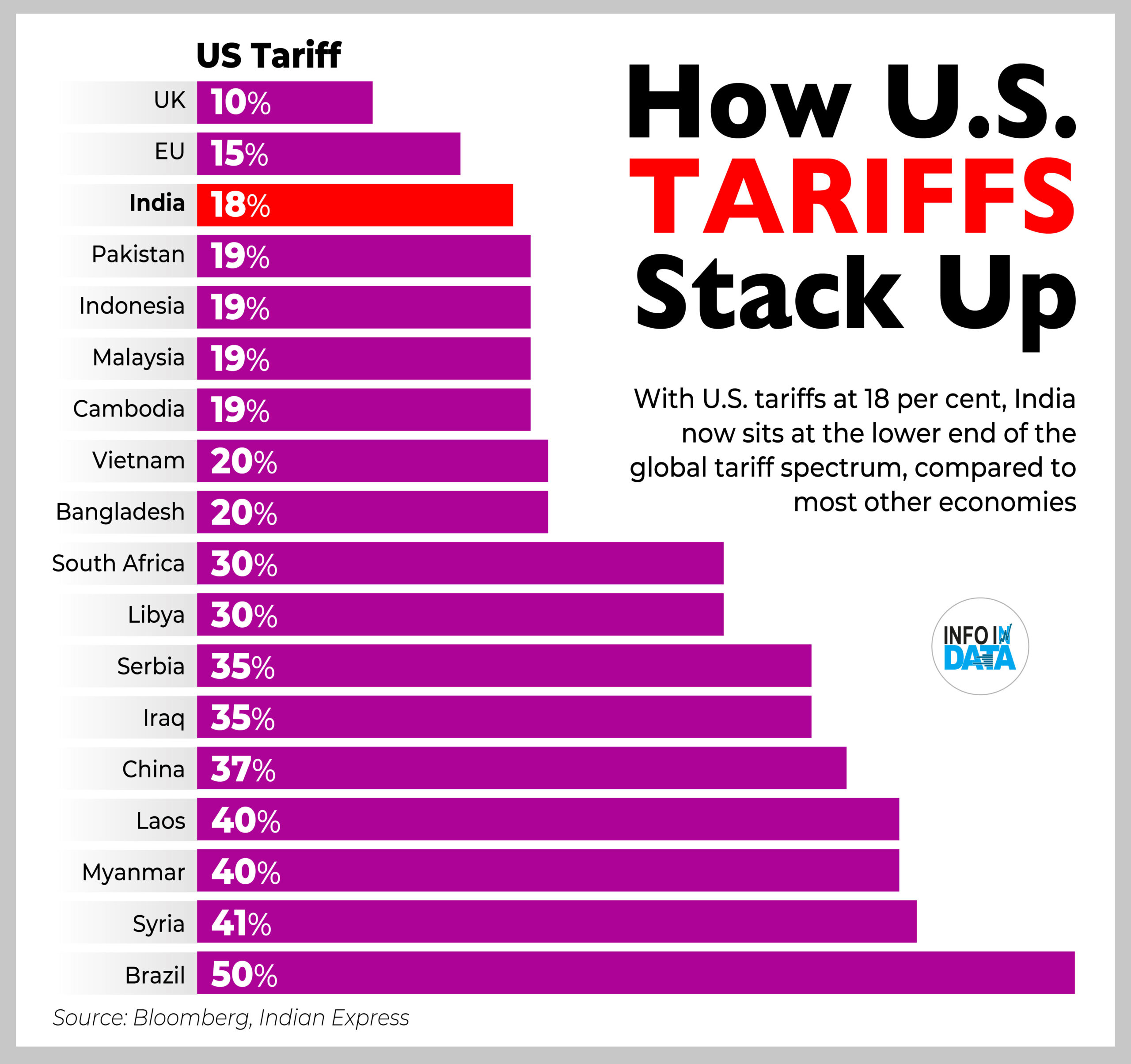 https://x.com/infoindata/status/2018579099602858398?s=20
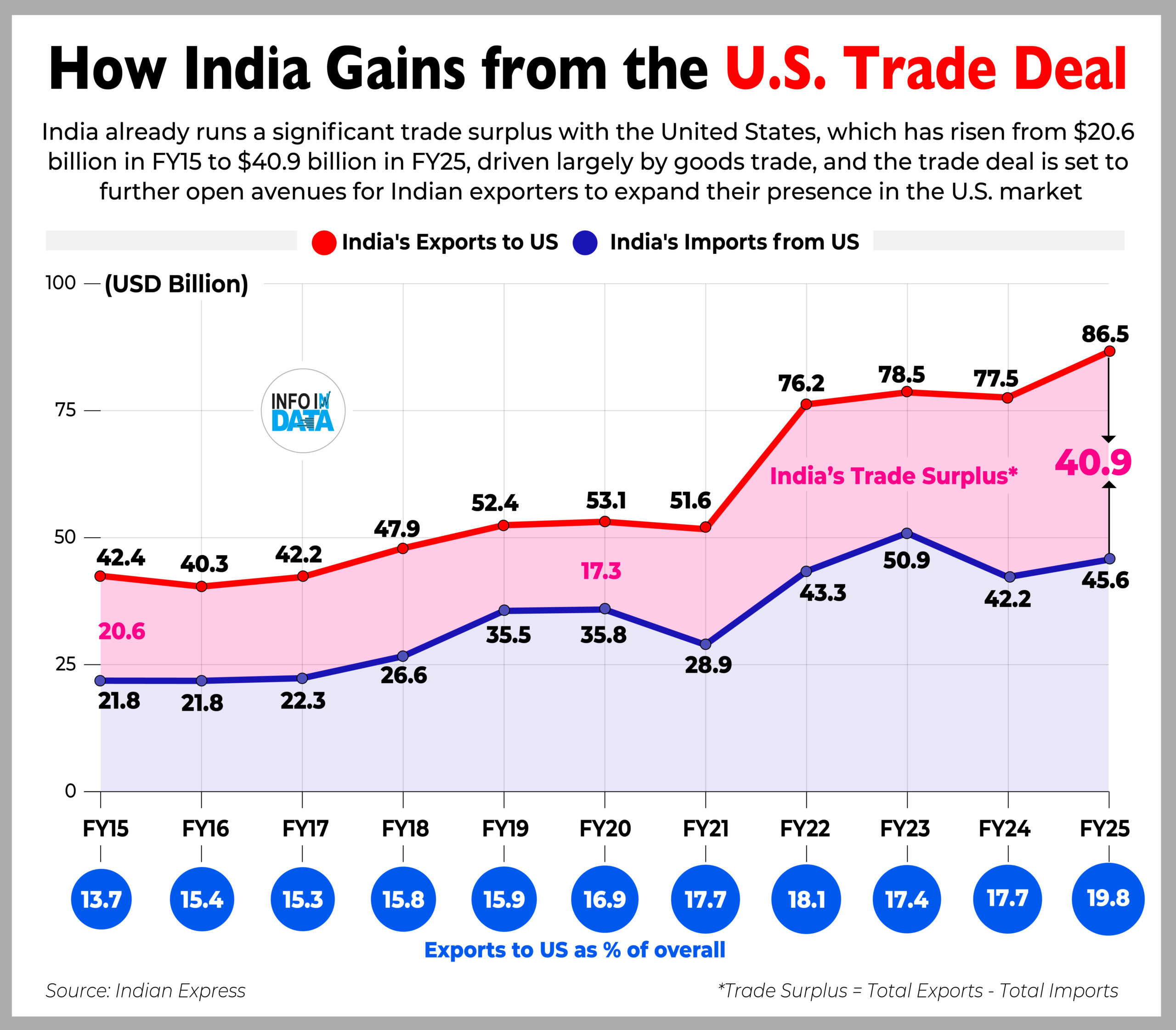
From Agreements to Outcomes:
India’s Expanding FTA Network
FTA signed since 2014: 8
- 2022- India-UAE CEPA
- 2022-India-Australia ECTA
- 2024 – India-EFTA TEPA
- 2025 – India – UK CETA
- 2025- India – New Zealand
- 2025 – India – Oman CEPA
- 2026- India – EU FTA
- 2026 – India-USA Trade deal
India as a Vishwabandhu:
Trusted Across Blocs, Chosen Across Borders
- India has emerged as the one nation trusted and actively sought as a partner by every nation in the world.
- President Trump’s tariff decision reflects this reality – India is no longer treated as a pressure point, but as a strategic partner.
- Under PM Modi, India has come into its own as a Vishwabandhu.
Trust That Transcends Regions
- West Asia: Deep strategic and economic partnerships with the UAE and Saudi Arabia – without being drawn into regional fault lines.
- Europe & Anglo-Sphere: Despite differences between the UK and the EU, both have signed FTAs with India.
- Indo-Pacific & Oceania: FTAs with Australia and New Zealand position India as a pillar of Indo-Pacific stability.
- Neighbourhood First: From Nepal and Sri Lanka to Bhutan and Myanmar, India has shifted from aid to partnership.
Global Standing Without Parallel
- India maintains strong relations with nearly all G7 and G20 nations. Perhaps the only country able to engage positively with over half the world’s population and global GDP.
The views and opinions expressed here belong solely to the author and do not reflect the views of BlueKraft Digital Foundation.