


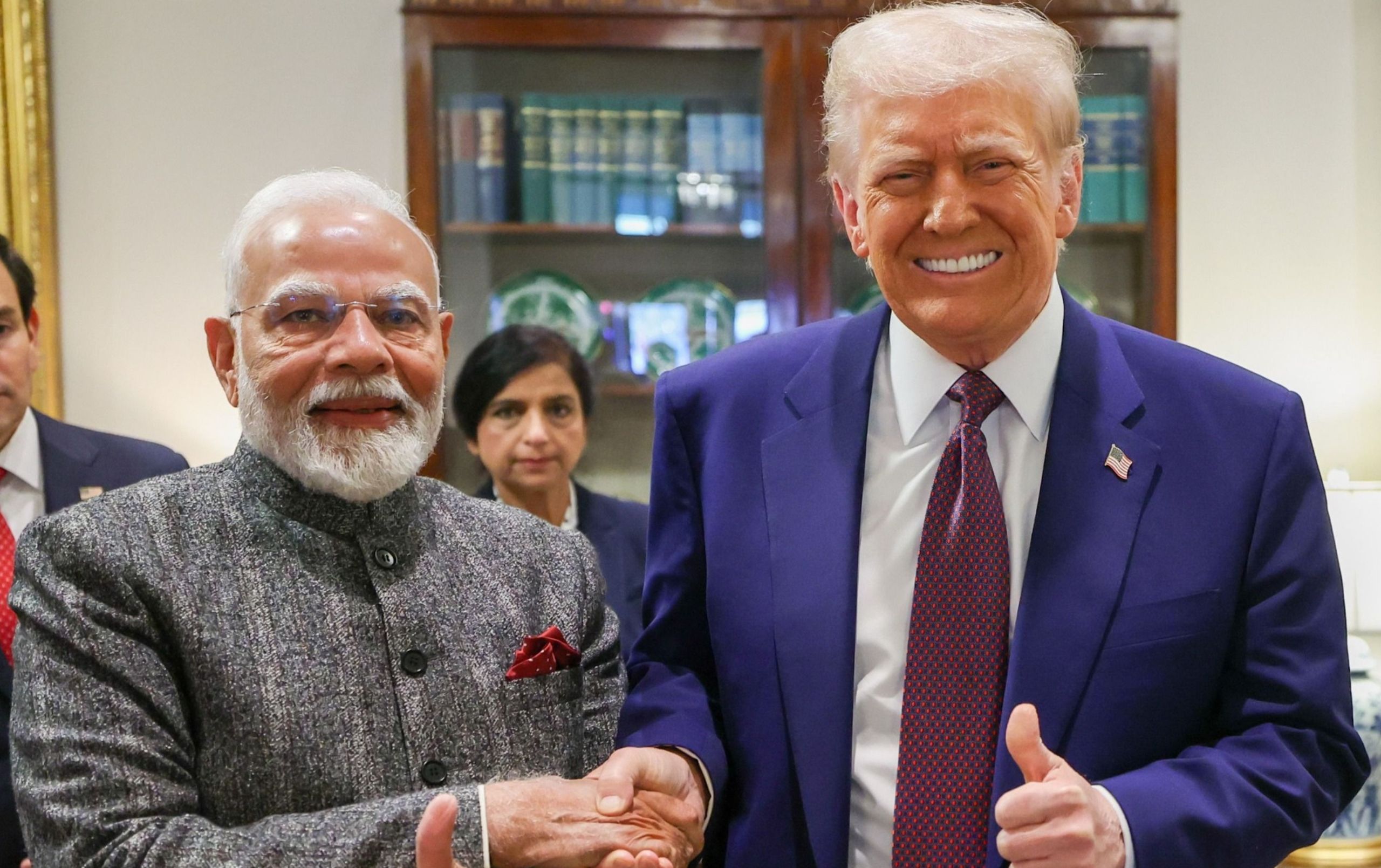
One conversation. Thirty-two points off a tariff. And a country that suddenly had everyone’s attention.
Fifty percent. That’s what America put on Indian goods. Fifty percent tariff. The kind of number that’s designed to hurt. Designed to make a country flinch, come crawling to the table, and accept whatever terms Washington writes.
India held its ground.
What happened next, over weeks is one of the sharpest pieces of strategic maneuvering any nation has pulled off in the last decade. A phone call between Prime Minister Modi and President Trump. And by the time the dust settled, India was sitting at 18%. Through a sequence of moves so deliberate, so precisely timed, that most of the world only understood the game after India had already won it.
A geopolitical story. And it matters to every single person living in this country.
The Number That Changed Everything
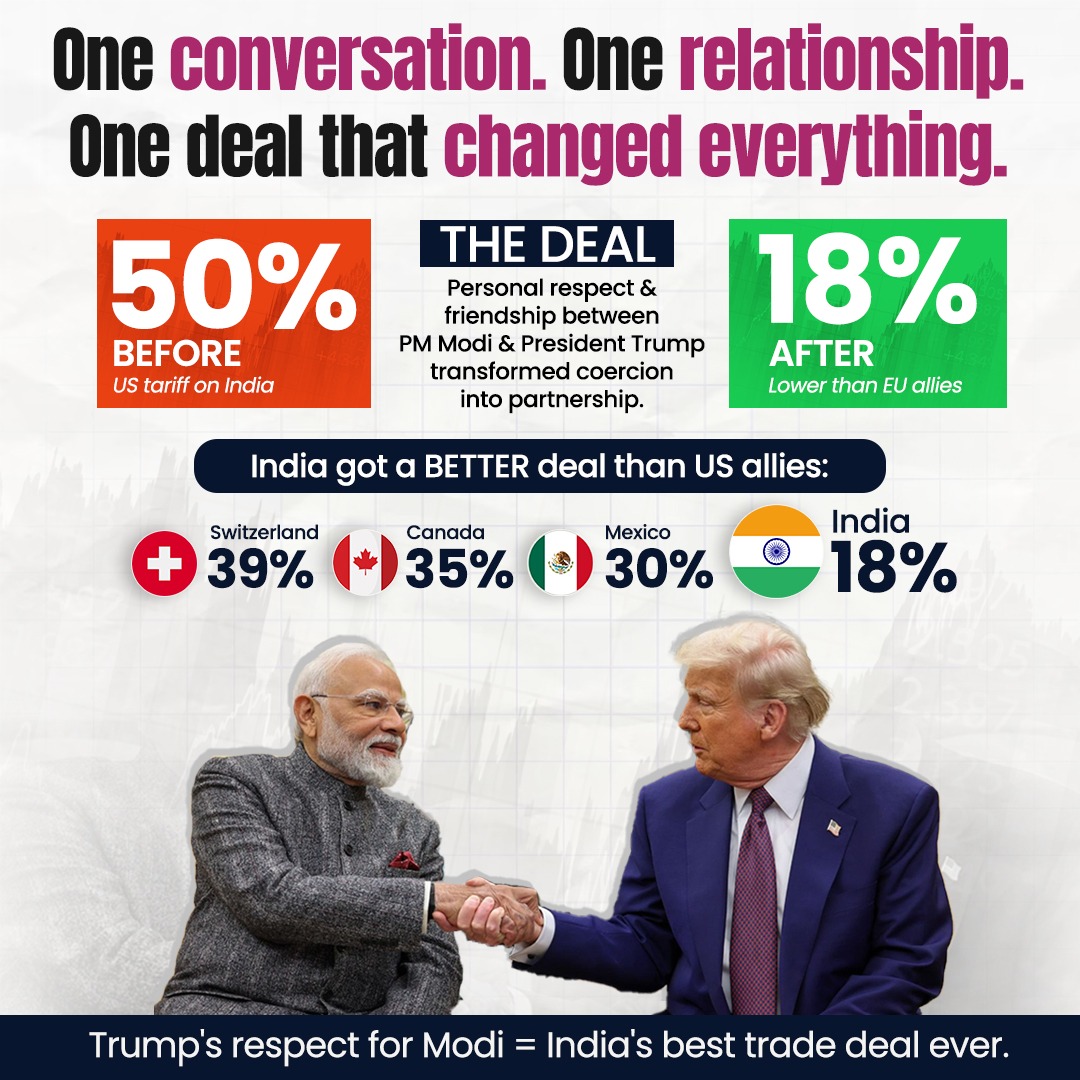
18% sounds modest until you compare it to what everyone else got handed. China is at 37%, Vietnam at 20%, Bangladesh at 20%, Pakistan at 19%, Sri Lanka, and this is almost absurd is at 44%. Even America’s oldest allies got hit harder. Switzerland is at 39%, Canada at 35%, Mexico at 30%.
India walked in as a partner and walked out with the most favourable number in the room. Better than countries that have been trading with America for generations. Countries with military alliances, NATO memberships, decades of history on that table.
That single shift from 50% down to 18% is worth over ₹83,000 crore a year in protected exports. That’s real money. That’s factories running. That’s salaries getting paid.
How India Actually Pulled This Off
Here’s where it gets interesting. Because this was a sequence. And the sequence was everything.
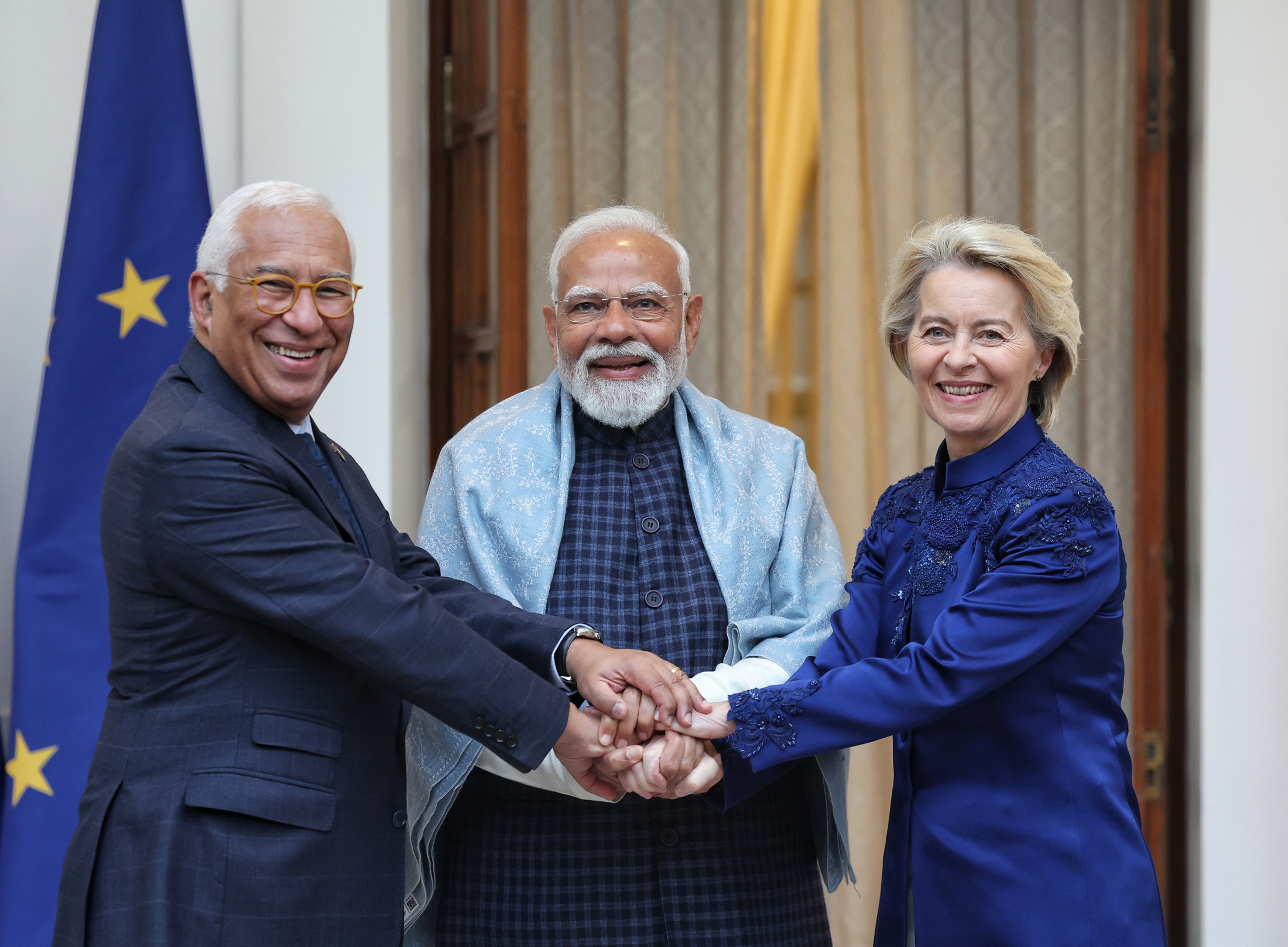
First, India made sure the world saw what it had built. On Republic Day 2026, India showcased its indigenous defense capabilities, and the chief guest was Ursula von der Leyen, the President of the European Commission. The EU choosing that stage, that moment, to show up that said everything about where India now stood.
Second, and this is the move people miss; India ran every negotiation at once. While the US tariff conversation was still happening, India accelerated its trade agreement with the EU and locked in the UK deal. Every single negotiation was designed to strengthen India’s hand in every other negotiation. Pure architecture.
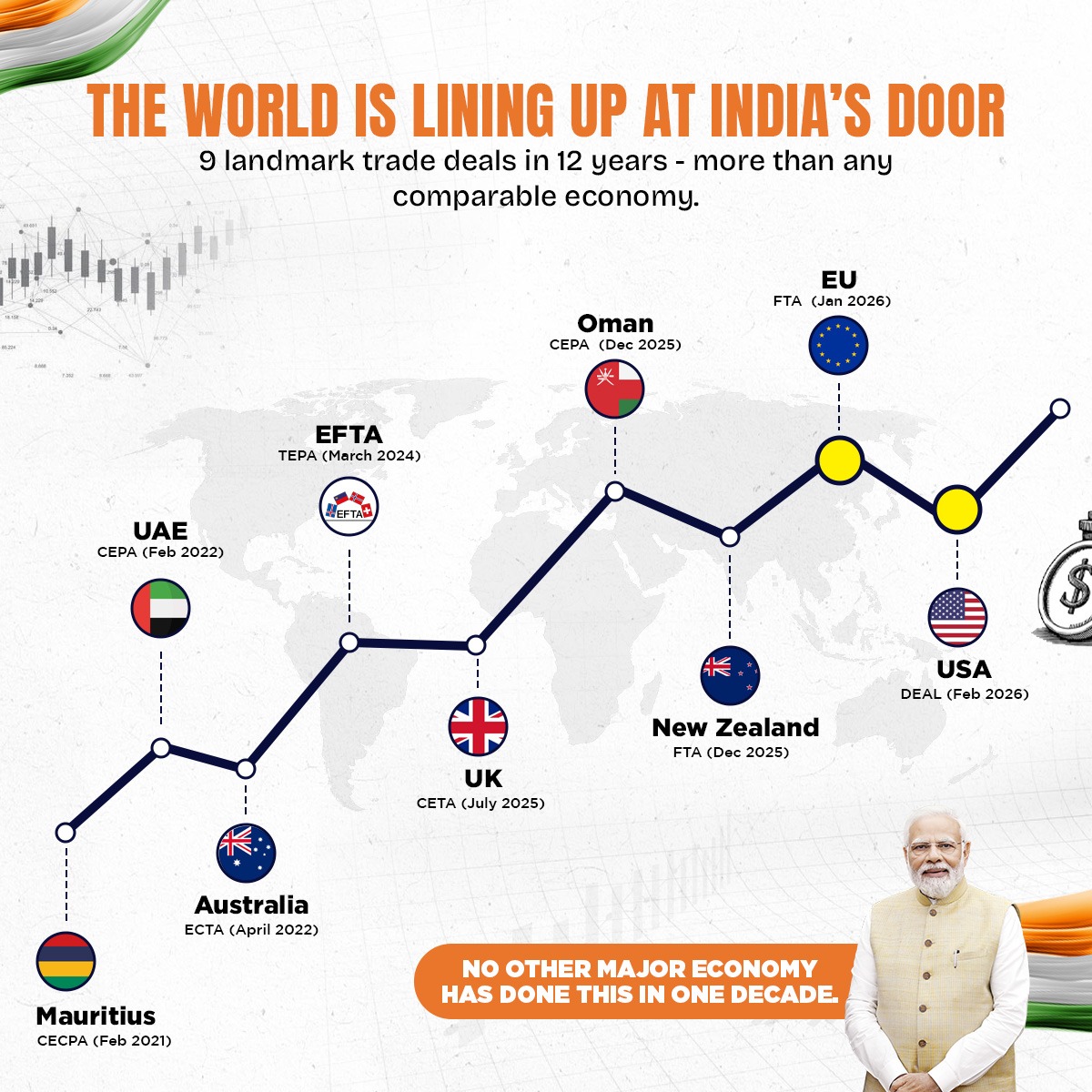
And the result? Washington came to the table wanting India on its side. And India negotiated from that position. Eight major trade agreements in twelve years. The scorecard says everything the words don’t need to.
What This Means for the People Who Actually Matter
Trade deals live in headlines. Their real life is in the lives of ordinary people. And this one touch almost everyone.
Think about the textile industry first. 4.5 Crore people work in it, 4.5 Crore. It’s the second largest employer in the country after agriculture. For years, Indian textile exporters were competing against Bangladesh and Vietnam with a slight disadvantage in tariff rates. India holds that advantage now. India is cheaper to export from than both of them.
The timing hit Bangladesh especially hard. The country went through a political crisis in August 2024. Sheikh Hasina’s government fell. Western buyers, the ones who had been sourcing garments from Dhaka for decades started looking around. India’s garment exports grew 24.35% in October 2025 alone. Supply chains physically moving.
For MSMEs, the small and medium businesses that keep this economy breathing, the door just opened wider than it has in a long time. Exporters in gems, leather, chemicals, engineering goods, all of them are now operating from a position of tariff advantage they have never had before. The Modi government has also linked these trade wins directly to PLI incentives & schemes that reward businesses for actually making things in India and realizing the dream of Aatmanirbhar Bharat. The money and the market access are arriving at the same time. That’s rare. That’s deliberate.
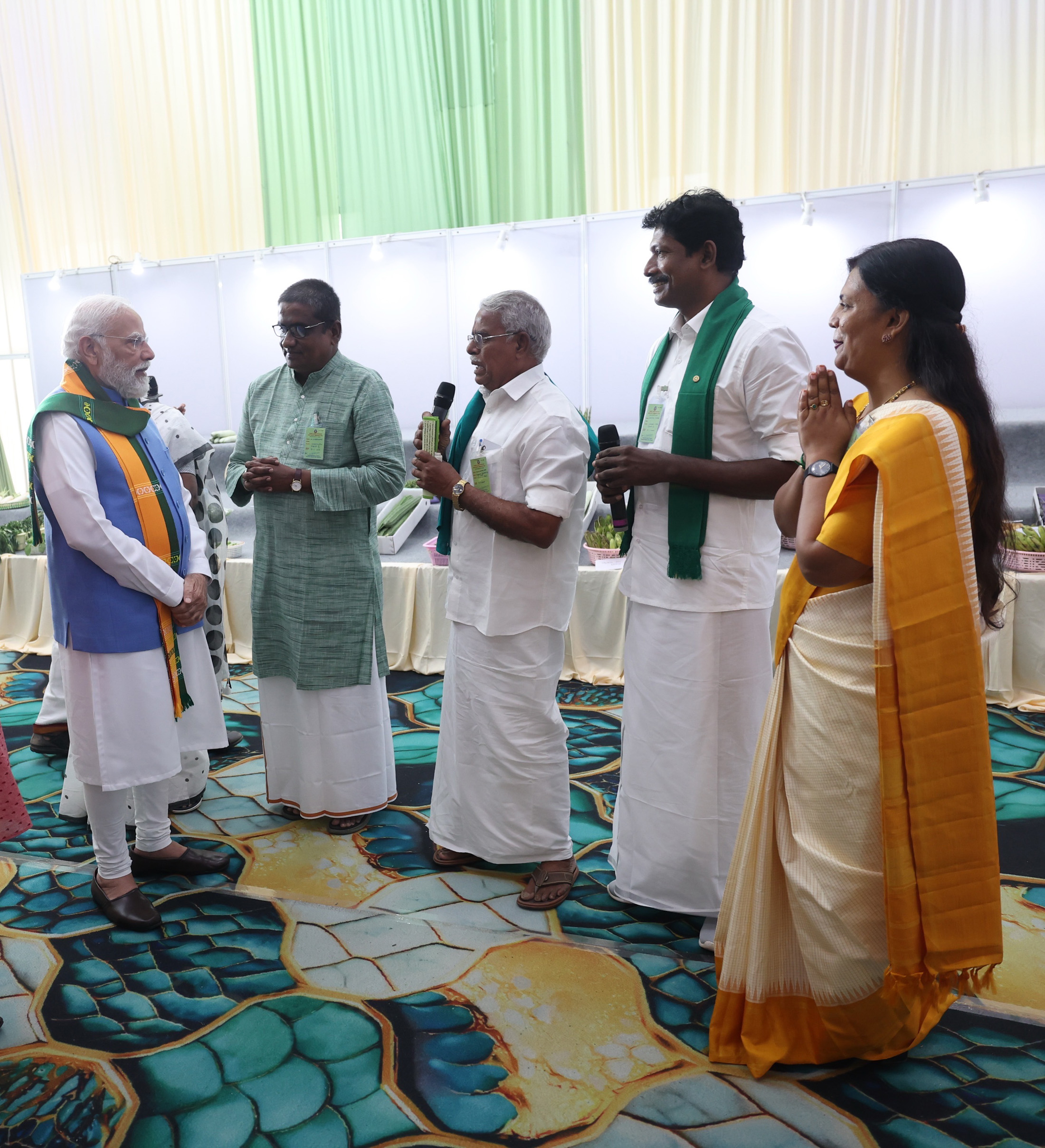
And agriculture? Agriculture is locked. Protected. Off the table. Every trade agreement India has signed since 2014 has a hard wall around dairy, cereals, poultry, and sensitive produce. The 44% of India’s workforce that depends on farming stays exactly where it is. A red line, held firm.
The Deals Nobody Talked About Enough
The US deal grabbed the headlines. The real breadth of India’s trade story is in the deals it signed around the same time, and what they collectively mean.
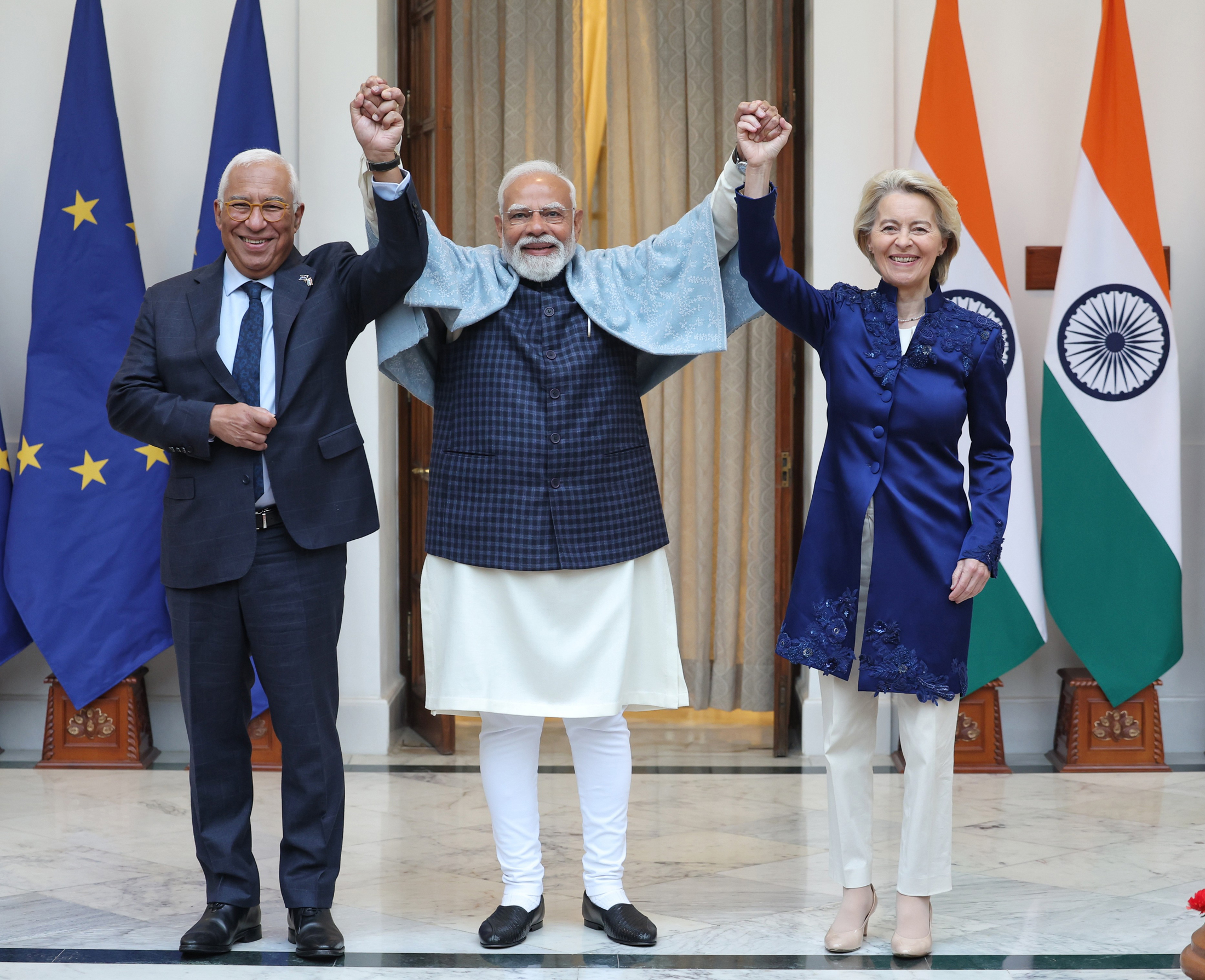
The EU deal is the big one and already got the attention for being “Mother Of All Deals”. Twenty-seven nations. 4.5 Crore people. The world’s largest single market. India got zero tariffs on $33 billion worth of textile, leather, gems, jewellery, and marine exports. 99% of Indian exports by value will have duty-free access. The EU sent both its Commission President and its Council President to India’s Republic Day — a dual honour that has almost no precedent. Europe chose India because India delivers. Scale, stability, and a government that follows through.
The UK deal gives India 99% duty-free access. Bilateral trade is set to more than double from $56 billion to $120 billion by 2030. The UK CETA covers 137 service sub-sectors. IT, financial services, healthcare, professional services. India’s services industry, which hit $387 billion in exports last year, just got a massive new runway.
The UAE and Gulf corridor is already humming. Trade crossed $100 billion. Energy security, technology investment, a massive Indian diaspora, it’s one of the most quietly powerful economic relationships India has.
EFTA nations- Switzerland, Norway, Iceland, Liechtenstein, committed $100 billion in foreign direct investment over 15 years and are targeting one million jobs in India. Duty-free access on 98% of Indian exports. These are wealthy, stable nations putting real money into Indian manufacturing.
Australia and New Zealand complete the picture. Critical minerals cooperation, clean energy, maritime security. The Indo-Pacific strategy is economic as much as it is military. And it’s working.
Put all of this together and India now has preferential trade access to over 500 crore people across four continents. That number covers 65% of the world’s population. No other developing nation has built anything close to this in the same timeframe.
The Pharmacy, the Diamonds, and the Young Engineers
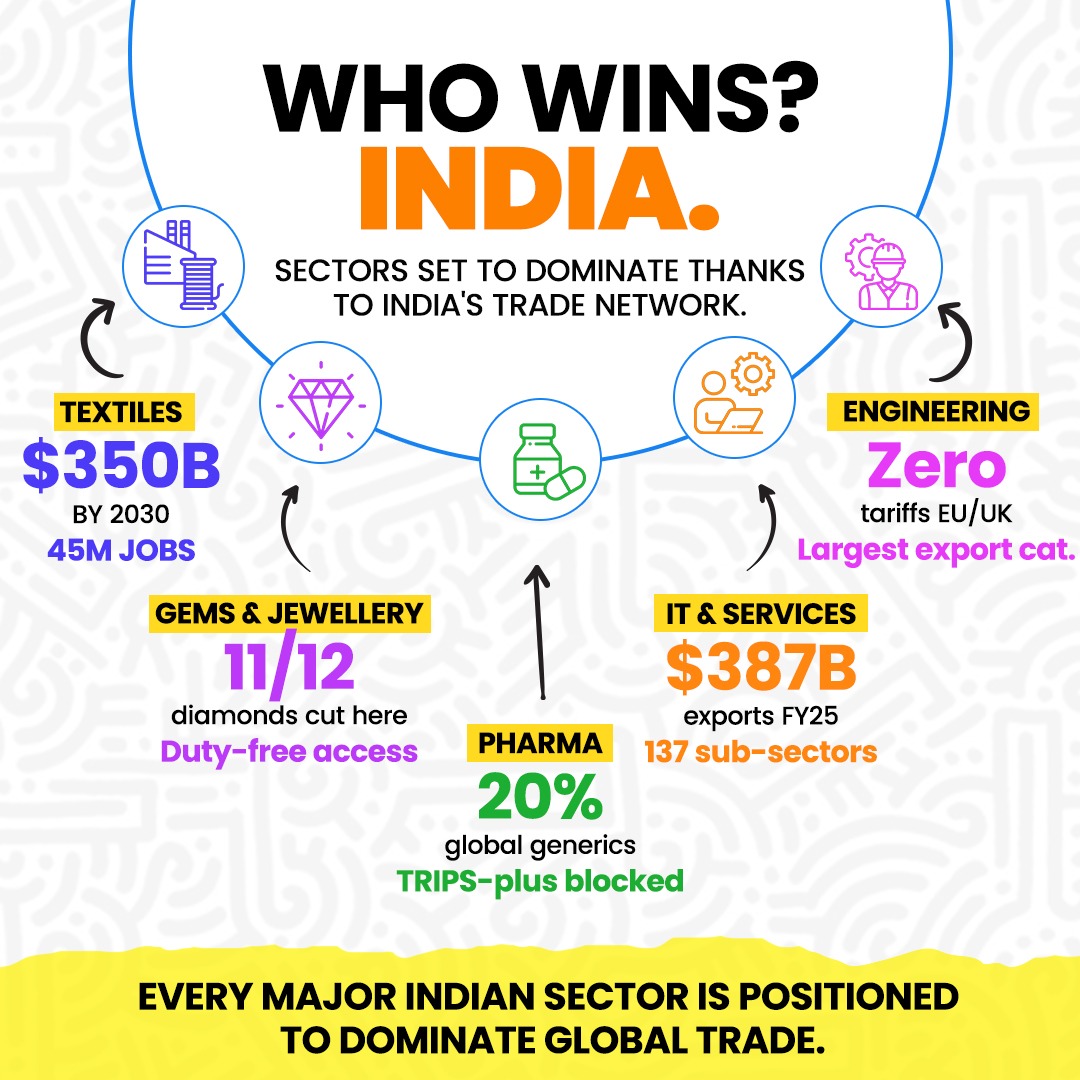
A few sectors deserve a closer look because they tell the story of what India actually exports and why these deals matter so specifically.
India processes 11 out of every 12 diamonds cut in the world. Eleven out of twelve. The EU and UK deals give duty-free access to cut diamonds, gold jewellery, and silver articles. Combined with the UAE trade corridor, India’s gems industry now has a clear path to every major luxury market on earth.
India supplies 20% of the world’s generic medicines and 60% of its vaccines. The pharmaceutical protections in these deals matter because of this scale. The UK deal explicitly rejected patent term extensions and data exclusivity clauses, the kind of fine print that pharmaceutical giants from the West push for, and that could have strangled India’s generic drug industry. India’s negotiators kept those provisions out of every single recent FTA. The $25 billion generic pharma industry stays intact.
Engineering goods, the largest Indian export category, now face zero tariffs in EU, UK, and EFTA markets. Tariffs on machinery that were at 22% in the EU are going to zero. With PLI incentives stacked on top, India is moving from assembling components to actually manufacturing finished products.
And then there’s the young India story. India’s IT services exports doubled in a decade, from $158 billion to $387 billion. The UK deal opens 137 service sub-sectors. The EU deal opens 144. For a 23-year-old finishing an engineering degree in Pune, or a 26-year-old running a small export firm out of Hyderabad, these are doors. Real, concrete doors that opened in the last two years.
The US and India- A Partnership That Works
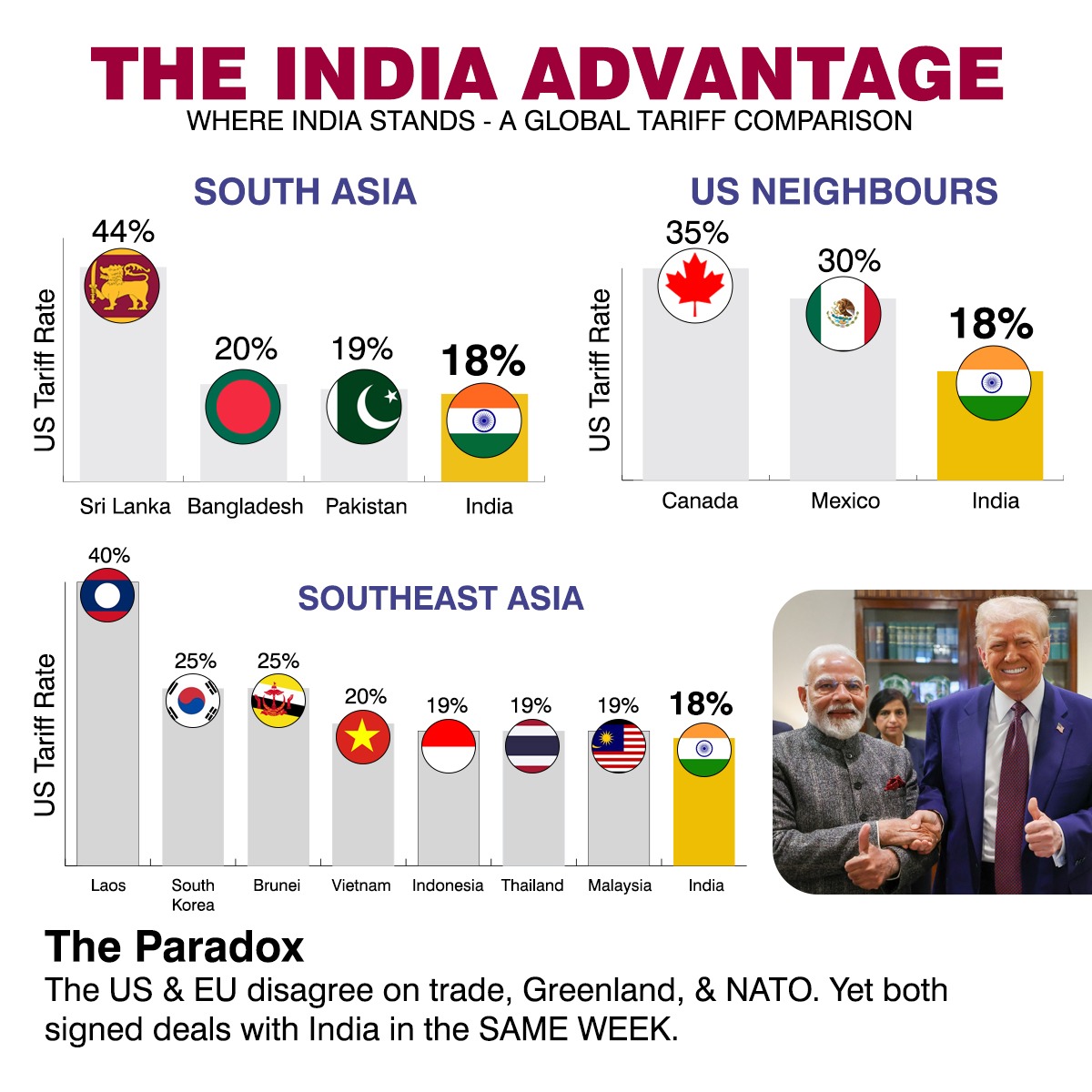
The United States and the European Union disagree on a lot right now. And yet, in the same week, both of them signed comprehensive trade deals with India. Both of them chose India as a partner. Independently. Simultaneously.
When two of the most powerful economies on the planet both land on the same country at the same time, that tells you something. It tells you India has become indispensable. Indispensable because of what it actually offers — scale, a young workforce, and a government that gets deals done.
India went from being a country the world pitied to being a country the world courted. And it did it while holding its ground on sovereignty, on agriculture, on its own terms.
The Longer Game
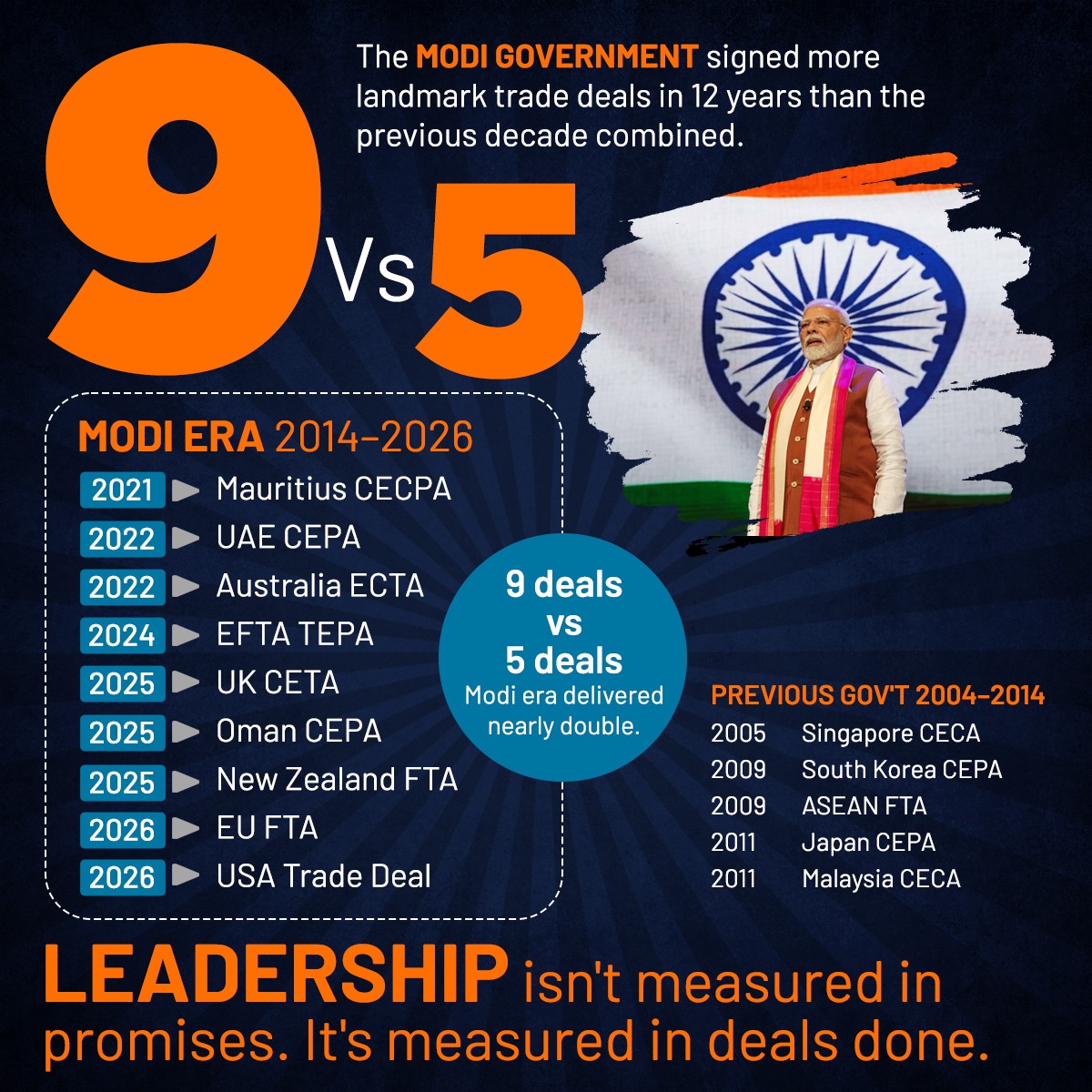
The scorecard tells the story before a single word of explanation is needed. Nine deals in twelve years under Prime Minister Modi. Five deals in the ten years before that. Nearly double. And the gap is not just in the numbers.
The previous decade’s five deals- Singapore, South Korea, ASEAN, Japan, Malaysia, all were within the same region. Asia talking to Asia. Solid agreements. Important, even. But they stayed in one neighbourhood.
What happened after 2014 was a different kind of ambition. The first deal signed was with Mauritius in 2021. That sounds modest until you realise it was India’s first-ever trade agreement with an African nation. A door that had never been opened before. Then the UAE CEPA, negotiated and closed in 88 days. The fastest free trade agreement India has ever signed in its history. Eighty-eight days. The world’s largest economies take years.
Australia followed in 2022. 96 percent of Indian exports, duty-free. EFTA nations- Switzerland, Norway, Iceland, Liechtenstein signed in 2024 and brought with them a $100 billion investment commitment and a target of one million jobs on Indian soil. The UK deal in 2025 gave India 99 percent duty-free access, with bilateral trade set to cross $120 billion by 2030. Oman signed in December 2025, and that deal was significant not just for India but for Oman. It was Oman’s first bilateral trade agreement since 2006. Nearly two decades, and they chose India.
Then came the two that changed the conversation entirely. The EU FTA on January 27, 2026. A combined market of $27 trillion. The deal that took nearly twenty years of on-and-off negotiations to close. And the USA trade deal on February 2, 2026. The 18 percent tariff that put India ahead of almost every other country at the table.
Nine deals. Six continents of reach. And the math is impossible to argue with, under the previous government, India had zero trade agreements with the developed Western world. Zero with the EU. Zero with the UK. Zero with the USA. Zero with EFTA. That changed completely.
The views and opinions expressed here belong solely to the author and do not reflect the views of BlueKraft Digital Foundation.