

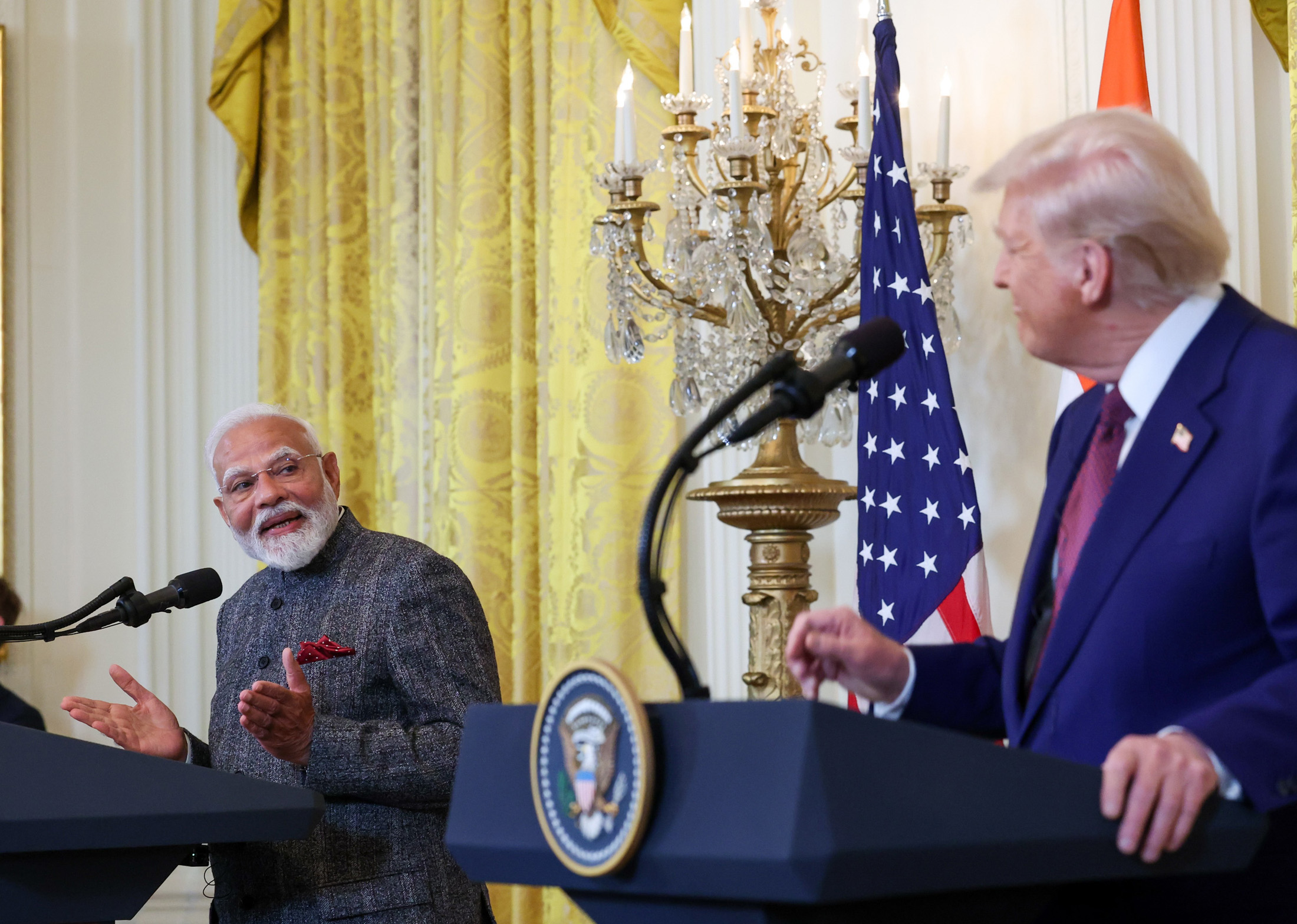
One conversation. Thirty-two points off a tariff. And a country that suddenly had everyone’s attention.
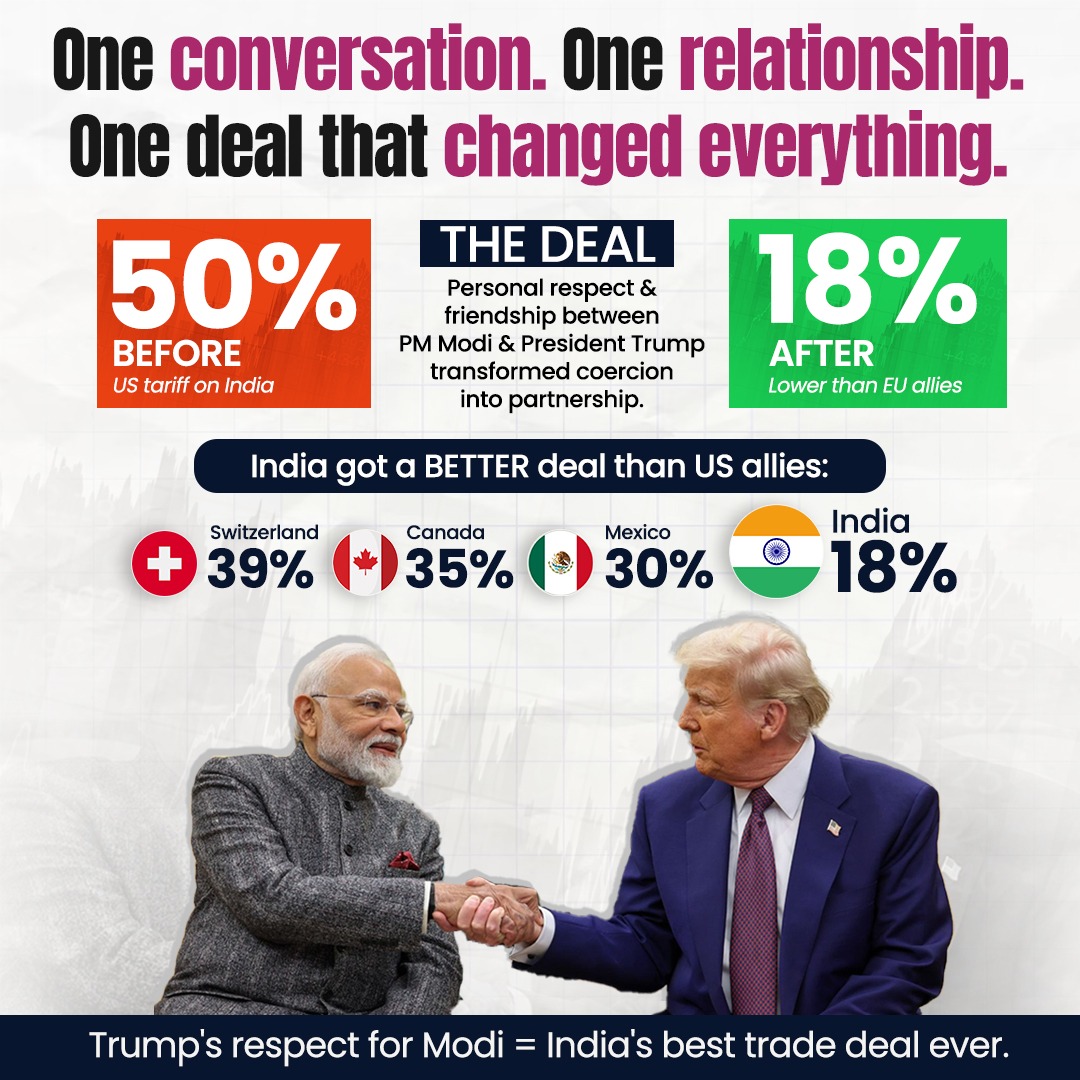
Fifty percent. That’s what America put on Indian goods. Fifty percent tariff. The kind of number that’s designed to hurt. Designed to make a country flinch, come crawling to the table, and accept whatever terms Washington writes.
India held its ground.
What happened next, over weeks is one of the sharpest pieces of strategic maneuvering any nation has pulled off in the last decade. A phone call between Prime Minister Modi and President Trump. And by the time the dust settled, India was sitting at 18%. Through a sequence of moves so deliberate, so precisely timed, that most of the world only understood the game after India had already won it.
A geopolitical story. And it matters to every single person living in this country.
The Number That Changed Everything
18% sounds modest until you compare it to what everyone else got handed. China is at 37%, Vietnam at 20%, Bangladesh at 20%, Pakistan at 19%, Sri Lanka, and this is almost absurd is at 44%. Even America’s oldest allies got hit harder. Switzerland is at 39%, Canada at 35%, Mexico at 30%.
India walked in as a partner and walked out with the most favourable number in the room. Better than countries that have been trading with America for generations. Countries with military alliances, NATO memberships, decades of history on that table.
That single shift from 50% down to 18% is worth over ₹83,000 crore a year in protected exports. That’s real money. That’s factories running. That’s salaries getting paid.
How India Actually Pulled This Off
Here’s where it gets interesting. Because this was a sequence. And the sequence was everything.
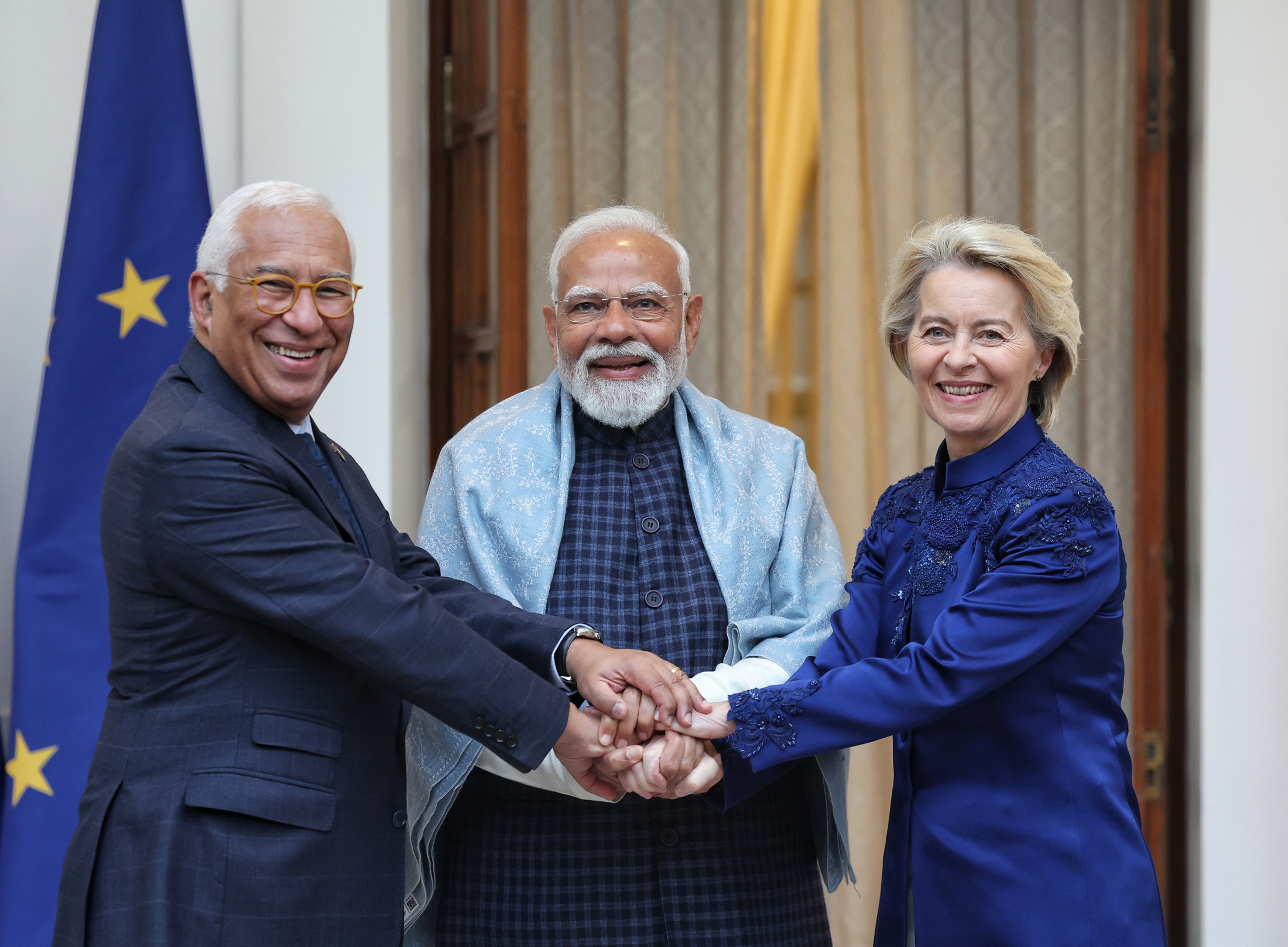
First, India made sure the world saw what it had built. On Republic Day 2026, India showcased its indigenous defense capabilities, and the chief guest was Ursula von der Leyen, the President of the European Commission. The EU choosing that stage, that moment, to show up that said everything about where India now stood.
Second, and this is the move people miss; India ran every negotiation at once. While the US tariff conversation was still happening, India accelerated its trade agreement with the EU and locked in the UK deal. Every single negotiation was designed to strengthen India’s hand in every other negotiation. Pure architecture.
And the result? Washington came to the table wanting India on its side. And India negotiated from that position. Eight major trade agreements in twelve years. The scorecard says everything the words don’t need to.
The views and opinions expressed here belong solely to the author and do not reflect the views of BlueKraft Digital Foundation.